
Cranial Solutions · Auckland & Christchurch
Migraines & Headaches
This May Be the Real Reason Your Headaches Haven’t Gone Away
Many approaches fail to provide lasting results because they miss the primary mechanical culprit - abnormal tension on the dura mater protecting your brain and upper spinal cord. We uniquely and specifically target this deep underlying cause through precise endonasal mechanics, releasing the tension & cycle of pain
Craniocervical Assessment · Advanced Biomechanics
We examine cranial and facial mechanics, jaw movement and the upper neck alongside your headache history. The findings guide whether NasalRX, cervical care or another next step is appropriate for you.
Already Had Other Assessments or Treatment?
Already seen a physiotherapist, doctor, specialist, chiropractor, osteopath or cranial osteopath? Advanced Craniocervical diagnosis is a post graduate field - it provides expert comprehensive diagnosis exclusively in the study of chronic Head/Migraine conditions - misdiagnosis is known as a common issue in medicine. Your previous care may not have included this particular assessment approach.
By appointment in Auckland and Kaiapoi, serving Christchurch.
Your First Visit
Ask us personally
Ask About Headaches & Migraines
Leave your details and our team will reply personally with more information and answers to your questions. No obligation to book.
Your Craniocervical Assessment, Explained
What Makes This Assessment Different?
We combine your headache history with examination of cranial and facial mechanics, jaw movement, the nasal airway and upper-neck function. This connected assessment guides whether NasalRX, cervical care or another next step is appropriate.
Why Assess Structural Restrictions?
Our clinical approach looks for restricted movement and tension that may be relevant to recurring head pressure, jaw tension or neck discomfort. We review these findings alongside headache frequency, intensity and daily function.
Understanding Cranial Mechanics and the Dura
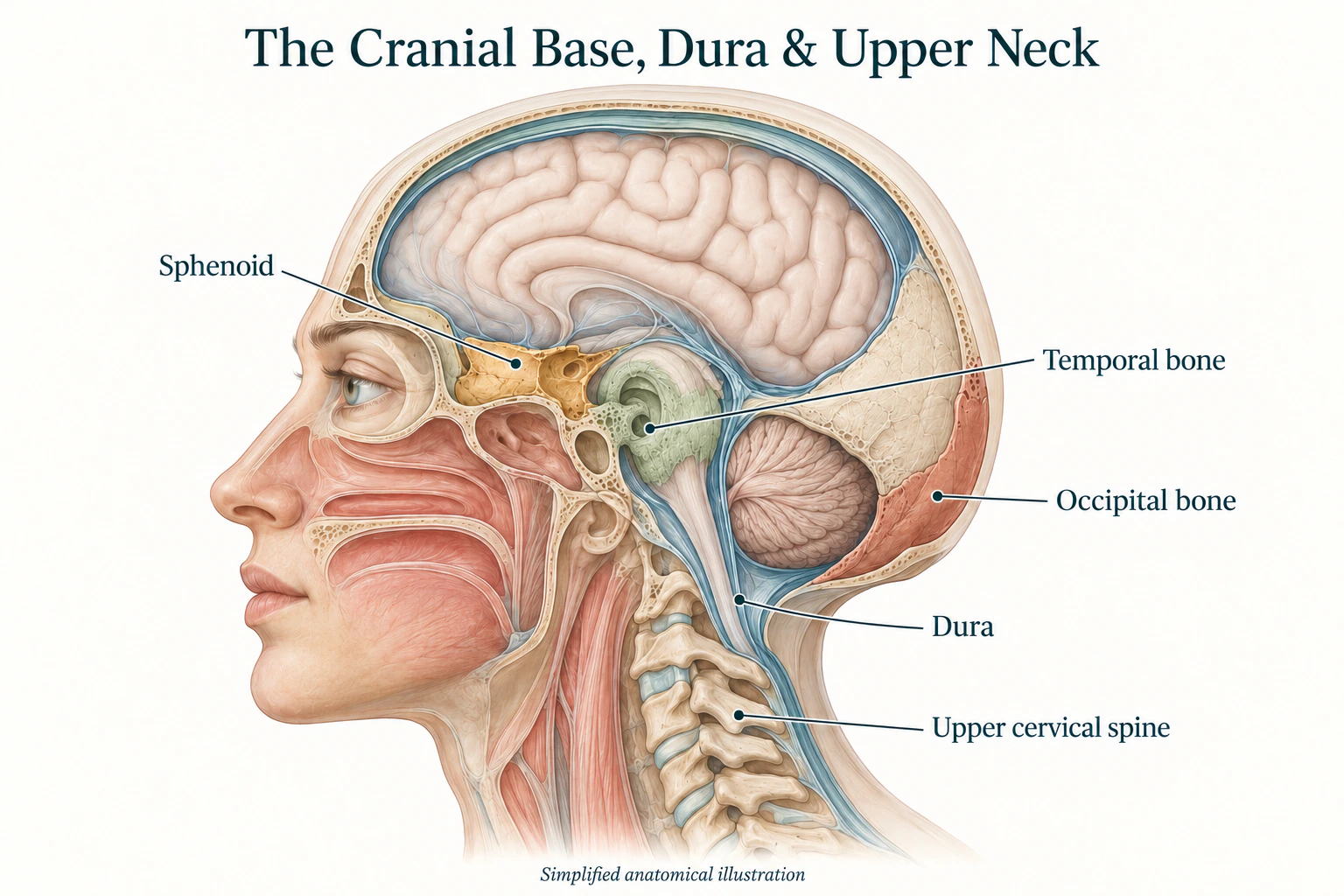
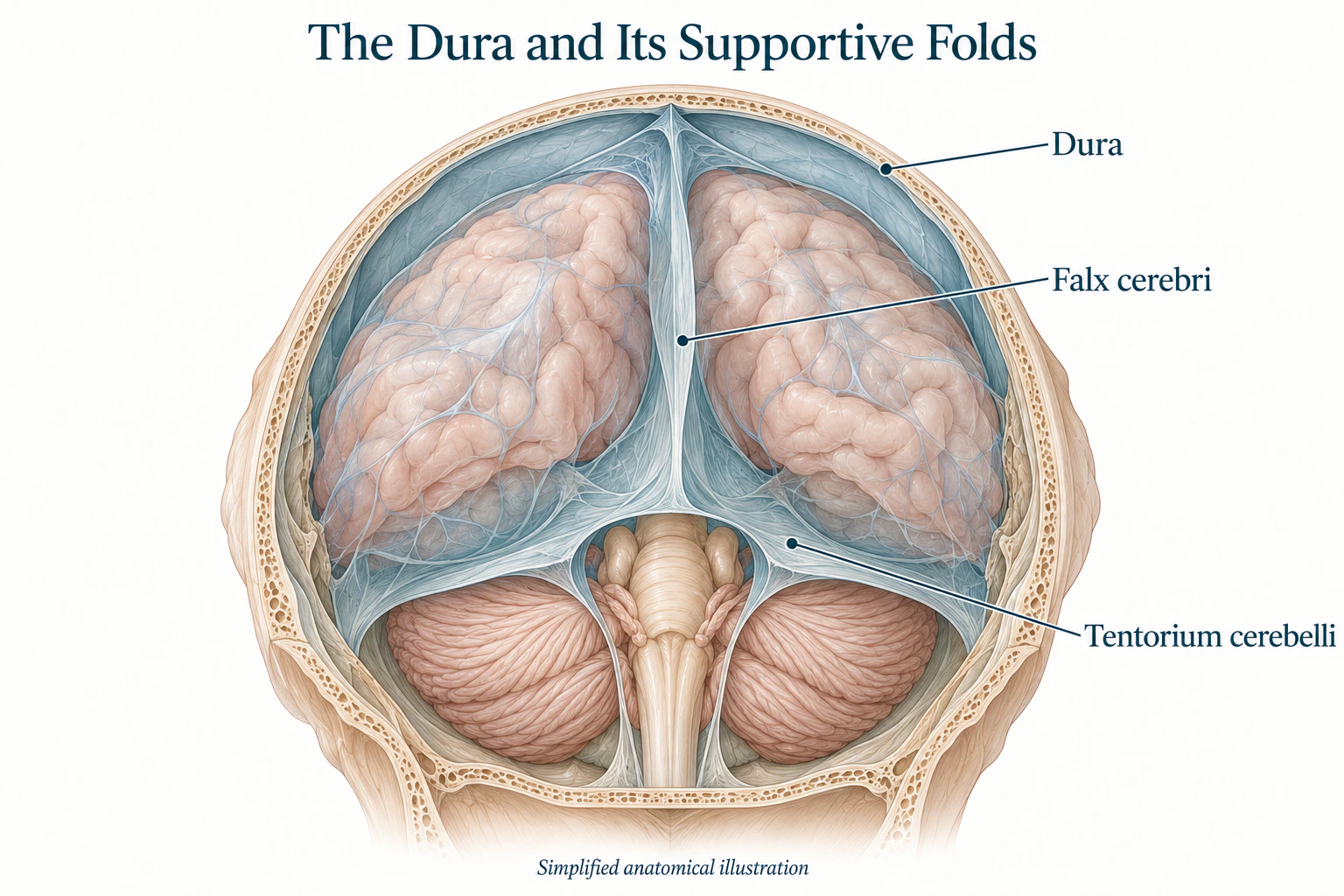
At the centre of our approach is the dura, the protective membrane surrounding your brain and spinal cord. When subtle structural misalignments create tension or physical pressure on this deep membrane, it can irritate vital neural pathways and trigger persistent, recurring head pressure.
How The NasalRX Procedure Helps
The NasalRX Procedure is designed to address these internal restrictions directly. This precise, non-surgical endonasal approach uses gentle, controlled inflation inside the nasal passages to release deep cranial and facial blocks.
By easing underlying dural tension, the procedure focuses on reducing physical strain. This supports natural intracranial fluid movement and creates the ideal environment for long-term recovery.
Stop managing the symptoms of internal compression. Address the structural restriction at the core.
Structural Realignment & Core Mechanisms
Our clinical protocol focuses directly on structural cause and effect. Rather than offering generalised or short-term maintenance, we prioritise deep, foundational change. We conduct a thorough mechanical assessment of your internal nasal anatomy, jaw mobility, and upper neck alignment to establish a clear structural baseline.
This enables us to map out a precise sequence of sessions specifically engineered to correct bone restrictions and facilitate deep skeletal alignment. By directly releasing fixed cranial and facial boundaries, the NasalRX procedure delivers significant clinical mechanical change for symptoms to dissolve - restoring optimal cranial mechanics, relieving deep-seated tension, and providing a stable foundation for long-term health.
Book a Migraine & Headache Examination & AssessmentThe Cranial Base, Dura & Upper Neck
Understanding Your Migraine & Headache Pattern
People living with migraine or recurring headaches often describe more than head pain alone. Their symptoms may include pressure around the forehead or temples, discomfort behind the eyes, light sensitivity, neck stiffness, jaw tension or restricted nasal breathing.
We consider how these symptoms fit together and which findings may be relevant to your experience.
A Connected Cranial and Cervical Approach
Your head, neck, jaw, and breathing don't work in isolation.
When one area is out of balance, it pulls on the rest. We evaluate your entire structural frame to deliver a combined NasalRX and cervical treatment that brings lasting balance.
Our model also considers how mechanical relationships and breathing may influence circulation, cerebrospinal fluid, the fluid surrounding the brain and spinal cord and drainage pathways. These fluid-related relationships form part of our clinical rationale.
Assessment helps us decide whether this approach is appropriate for you, establish the symptoms that matter most, and review your response as care progresses.
While standard medicine gives headaches dozens of different labels-from sinus and TMJ to ocular and exertion-these names usually describe what triggers inflammation rather than the biomechanical cause. In fact many of these painful conditions are mechanical issues driven by restricted, misaligned skull bones and neck vertebrae that trap nerves, impair drainage, and compress delicate pathways. From biomechanical perspective here is how common headache types relate to underlying structural alignment:
- Sinus Headaches: Restricted facial bones (maxilla, ethmoid, and vomer) crimp sinus drainage pathways shut, trapping fluid and creating intense pressure when weather or minor allergies trigger swelling.
- TMJ Headaches: Misaligned skull bones force the jaw joint off its natural track, causing severe muscular tension up the side of the head that mimics a joint or tooth issue.
- Cluster Headaches: Structural restriction in the sphenoid bone can compress the trigeminal nerve pathway as it passes through the skull, triggering severe pain signals.
- Cervicogenic Headaches: Restricted movement or misalignment in the upper neck vertebrae can irritate local nerves, referring pain upward into the forehead and behind the eyes.
- Ocular / Visual Migraines: Restricted movement in the bones surrounding the eye socket can compress nerves and blood vessels passing through the sphenoid bone, contributing to visual strain and auras.
- Exertion Headaches: A rigid, restricted cranium cannot naturally flex to accommodate normal shifts in blood and fluid pressure during heavy exercise or straining.
Because the brain's protective membrane (the dura) is packed with sensitive nerve endings, structural strain can directly irritate the pathways that transmit head pain. Normalising movement and physical space around these delicate structures helps address the mechanical strain driving persistent discomfort.
The Dura and Its Supportive Folds
The Migraine, Headache & Neck Pain Connection
Neck pain is common among people living with migraine. A systematic review found that approximately 77% of people with episodic migraine and 87% with chronic migraine reported neck pain in the included clinic-based studies.
The head and upper neck share interconnected sensory pathways. This helps explain why pain in these regions can overlap, although neck pain during migraine does not always mean that a neck problem is causing the attack.
The Myodural Bridge: Connecting the Neck and Dura
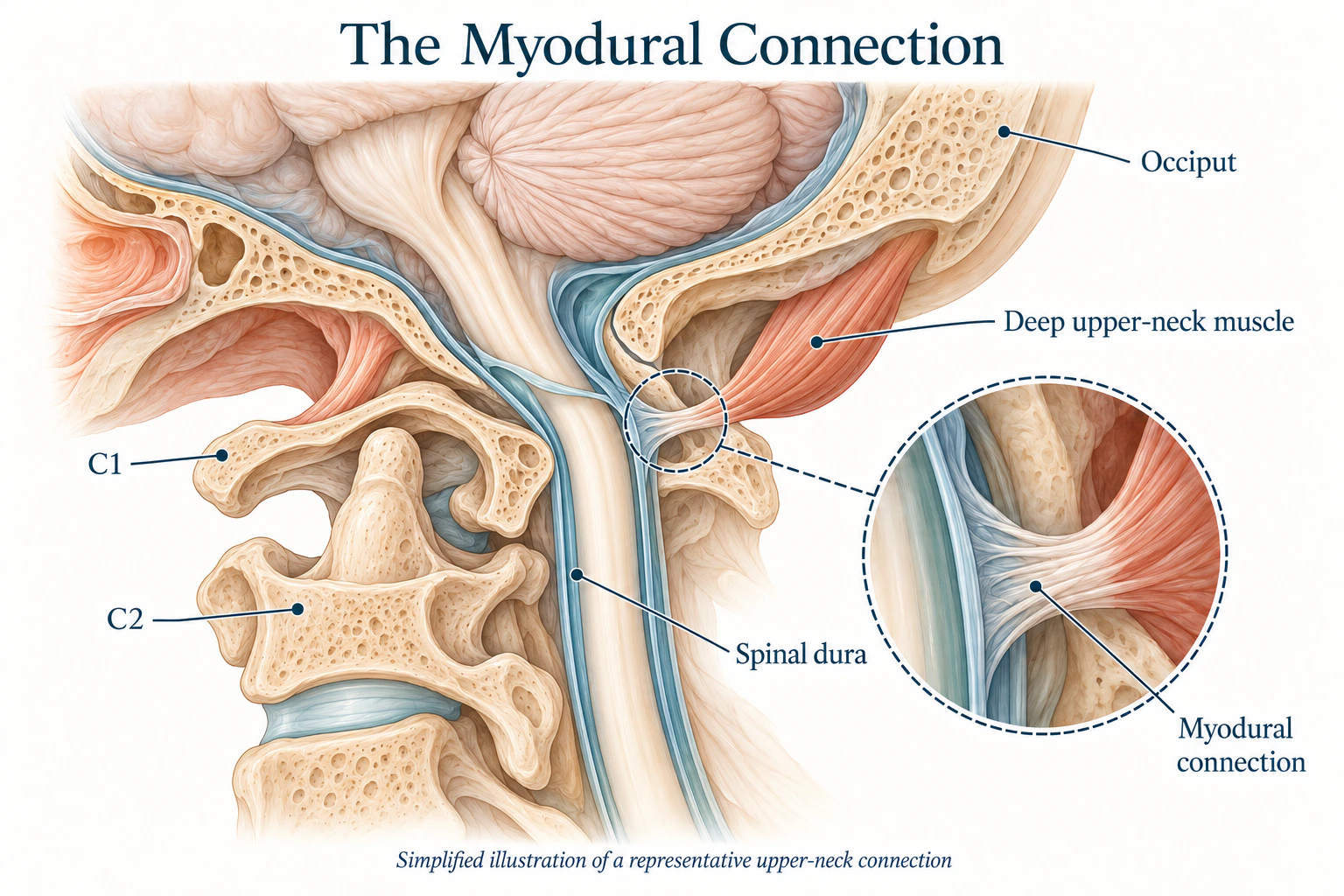
The myodural bridge physically links small upper-neck muscles to the protective membrane surrounding the brain and spinal cord, creating a two-way connection where neck movement and muscle tension can directly influence dural mechanics, fluid movement, and pain.
Cranial and Cervical Care Together
Cervical assessment is part of our approach. We consider neck movement, tenderness and symptom patterns alongside the occipital region, cranial base, jaw and face.
Where appropriate, cervical care accompanies NasalRX within the same treatment plan. We review which findings are relevant to your symptoms and how you respond as care progresses.
The Myodural Connection
Eye Discomfort, Light Sensitivity & Migraine Triggers
Pain behind the eyes and sensitivity to light can be among the most disruptive parts of a migraine. Some people also describe facial pressure or discomfort when looking in particular directions.
These symptoms matter in our assessment. We consider them alongside your migraine or headache pattern and the findings from examination.
The Eye-Dura Relationship
Because the protective coverings around the optic nerve directly connect to the membranes surrounding the brain, structural tensions in the head and neck can trigger light sensitivity and discomfort with eye movement. Treatments like NasalRX help repair these mechanical strains, which patients frequently report leads to improvements - less eye discomfort, less light sensitivity, and fewer to no migraine attacks.
Understanding Your Triggers
You may notice that your migraine attacks or other headaches follow a pattern involving sleep, stress, hormonal changes or shifts in the weather. Understanding your own pattern helps us assess your symptoms and review progress.
What to Expect from NasalRX Treatment
NasalRX is a non-surgical procedure that uses a small inflation device within selected nasal passageways. Brief, controlled inflation creates a sensation of pressure followed by release.
Treatment is tailored to your symptoms and assessment findings.
1. Understanding Your Symptoms
We begin with your migraine and headache history and how symptoms affect your life. Assessment considers cranial and facial mechanics, the jaw, upper neck and nasal breathing, helping us determine whether NasalRX is appropriate for you.
2. The NasalRX Procedure
We explain the procedure before starting, including the sensations you may experience. The device is positioned within the nasal passage, and inflation is applied briefly and in a controlled manner.
Our clinical aim is to influence cranial and facial mobility and the mechanical relationships discussed above. Cervical care may accompany NasalRX where appropriate.
3. Comparing Before & After Treatment
Before and after NasalRX, we evaluate your head and neck mechanics to guide targeted treatment- using controlled inflation, soft-tissue work, or joint repositioning -to clear lingering structural restrictions. Clinical experience shows that these physical improvements directly mirror the changes patients report in head pressure, eye discomfort, light sensitivity, and headache frequency. Depending on the findings, treatment may involve internal joint alignment through controlled inflation, external manual soft-tissue work and joint repositioning, or a combination of these approaches.
Your Comfort Matters
The pressure sensation can feel unusual, and individual experiences vary. We discuss suitability, possible discomfort and relevant risks beforehand, and encourage you to tell us how you feel throughout treatment.
For a fuller explanation, visit NasalRX Treatment and NasalRX Safety & What to Expect.
Explore Your Migraine & Headache Questions
Living with migraine or recurring headaches often brings questions beyond the pain itself. These articles explore common symptom patterns and concerns, helping you better understand your experience.
Choose the topic that matters most to you:
- Neck Pain, Migraine & HeadachesHow are they connected?
- Migraine & Headache Behind the EyesEye pain, light sensitivity and visual symptoms.
- Weather Changes, Barometric Pressure & MigraineUnderstanding your pattern of sensitivity.
- Waking Up With a Headache or MigraineExploring possible contributors.
- Menstrual & Hormonal MigraineUnderstanding recurring patterns.
- Medication Overuse & Rebound HeadacheUnderstanding when frequent medication use may contribute.
For treatment information, visit NasalRX Treatment and NasalRX Safety & What to Expect.
Frequently Asked Questions
Can NasalRX help with migraines and recurring headaches?
In our clinical experience, many patients receiving NasalRX report substantial improvements in migraine attacks, recurring headaches and associated symptoms. These changes are often profound, allowing patients to return to activities they had been missing and get back to enjoying life.
Our approach focuses on craniofacial mechanics, dural relationships and upper cervical function. An individual assessment helps us determine whether this approach is appropriate for you. These outcomes reflect our clinical experience and patient feedback; responses vary.
What makes the Cranial Solutions approach different?
NasalRX is central to our cranial and structural approach. We consider the relationships between the cranial base, facial structures, jaw, upper neck and pain-sensitive dura, alongside your symptoms and medical history.
Treatment combines NasalRX with cervical care where appropriate, with progress assessed through both hands-on examination and your experience following treatment.
Why do you assess the neck when treating migraine?
The head and upper neck have closely connected sensory pathways. The small muscles beneath the skull also have connective-tissue attachments to the spinal dura, known as the myodural bridge complex.
We assess these relationships alongside cranial and facial findings to understand which features may be relevant to your presentation. We then treat accordingly, using advanced biomechanics to resolve the mechanical restrictions identified.
What does NasalRX treatment feel like?
The procedure involves brief, controlled inflation within selected nasal passageways. You may feel an unusual pressure sensation followed by release.
We explain the procedure beforehand and discuss your comfort, suitability and relevant risks. Our NasalRX Safety & What to Expect page provides more detail.
How do you assess my response to treatment?
We compare cranial and facial findings through hands-on palpation before and after treatment. Drawing on many years of clinical experience, we often find that changes felt during examination closely correspond with the improvements patients describe.
We also review the frequency and intensity of migraine attacks and other headaches, associated symptoms and your ability to enjoy everyday activities. Together, these findings guide your care.
Can NasalRX fit alongside my existing migraine care?
Yes. Our goal at Cranial Solutions is to help people living with chronic migraine experience a substantial reduction in the frequency and intensity of their attacks, regain daily activities and get back to enjoying life. We would love to see those improvements also reduce their need for medication, particularly where side effects have been difficult.
If your symptoms improve, your prescribing clinician can review whether reducing or stopping a medicine is appropriate. Continue prescribed medicines as directed until that review.
Research & Further Reading
For those who would like to explore further, these sources examine the dura, migraine pain pathways, cranial tissue mechanics and connections between the head and neck. They provide background to the clinical rationale discussed on this page, rather than direct evidence of NasalRX outcomes.
- Mechanical sensitivity of the tissues surrounding the brain
- Sensitivity to movement-related meningeal deformation in an experimental migraine model
- Mechanical properties of the dura and its supportive folds
- Neck pain in people living with migraine
- The myodural bridge: connections between upper-neck muscles and the dura
- How light can intensify migraine pain
- The optic nerve and its surrounding coverings
- Breathing and cerebrospinal fluid movement
Our reported outcomes reflect clinical experience and patient feedback. Research into NasalRX is still developing, while the dural and fluid-related relationships described here form part of our clinical approach, informed by anatomy, emerging research and many years of hands-on experience.
Explore whether our cranial and structural approach is right for you.
Book a Migraine & Headache Examination & Assessment