
Post-Nasal Drip: Causes, Symptoms & Treatment Options
If you constantly feel something draining down the back of your throat, need to clear your throat repeatedly, or wake with a cough and a sense of congestion, post-nasal drip can become an exhausting part of everyday life.
Your nose and sinuses naturally produce protective secretions that move towards the throat and are usually swallowed without you noticing. Post-nasal drip describes the uncomfortable sensation of drainage or secretions gathering at the back of the nose and throat.
For some people, it accompanies sinus pressure and restricted nasal breathing. For others, allergies, irritation of the nasal lining or throat-related factors are more prominent. Understanding your particular pattern helps guide the treatment approach.
At Cranial Solutions, we look at your nasal airflow and sinus symptoms alongside the cranial and facial structures surrounding these passages. Our NasalRx assessment considers the wider framework—including the septum, upper jaw and palate—and what previous treatments have achieved, whether or not your nose feels blocked.
Our aim is lasting, comfortable nasal breathing and improved sinus comfort, with progress reviewed throughout the treatment protocol.
Post-nasal drip symptoms: cough, throat clearing and nighttime discomfort
Post-nasal drip can feel like a trickle down the back of your throat, a sticky coating that is difficult to clear, or a persistent need to swallow. You may notice it most when lying down or first thing in the morning.
Common symptoms include:
- Repeated throat clearing or swallowing.
- A sensation of secretions gathering behind the nose or in the throat.
- A cough that becomes more noticeable at night.
- An irritated throat or a hoarse voice.
- Nasal blockage or sinus pressure occurring alongside the drainage.
The combination matters. Ongoing throat clearing with facial pressure and restricted nasal breathing gives us a different starting point from an isolated cough or throat irritation.
At Cranial Solutions, we ask when the symptoms occur, how your nasal breathing feels, whether sinus pressure is present, and what previous treatments have changed. This helps us understand your experience and assess whether NasalRx is a suitable part of your care.
Is it nasal drainage, silent reflux or throat muscle tension?
A sensation of something in your throat does not always mean discharge is draining from your sinuses. Several different problems can feel similar:
- Nasal or sinus drainage: secretions move towards the throat and may accompany a blocked or runny nose, sneezing or sinus symptoms.
- Silent reflux: stomach contents reaching the throat can cause irritation, hoarseness, coughing or repeated throat clearing—even without heartburn.
- Throat muscle tension: tension involving the muscles around the voice box and hyoid region may contribute to tightness, swallowing discomfort or a lump sensation. This is different from sinus discharge, although both can occur together.
The hyoid is a small bone in the front of the neck that provides attachment points for muscles involved in swallowing and tongue movement. Its surrounding muscle relationships can be relevant when throat tightness or swallowing discomfort is prominent.
These patterns can overlap. Symptoms alone cannot reliably identify the cause, so assessment considers nasal findings alongside throat symptoms, swallowing and voice changes, and possible reflux. This helps guide care towards the factors actually contributing to your discomfort.
What causes post-nasal drip?
Post-nasal drip describes a symptom rather than one single condition. When the sensation comes from the nose or sinuses, several factors may contribute.
Changes in the nasal lining
Allergies, colds and sensitivity to irritants can increase secretions or change their consistency. This may make drainage towards the throat more noticeable, particularly when the nose also feels congested.
Sinus inflammation and discharge
Inflamed sinuses can produce thicker discharge and may have difficulty clearing it through their small drainage openings. This can occur alongside facial pressure, restricted nasal breathing and discharge passing towards the back of the throat.
Restricted nasal airflow
A narrow breathing passage and drainage symptoms can occur together. The septum, turbinates and surrounding cranial and facial framework are therefore relevant to assessment when ongoing blockage accompanies sinus discomfort.
At Cranial Solutions, we consider both the condition of the nasal lining and the structures surrounding these passages. This helps us assess where NasalRx may be suitable, alongside addressing allergy, inflammation or other contributing factors when present.
Sinus discharge: how does it reach the back of your throat?
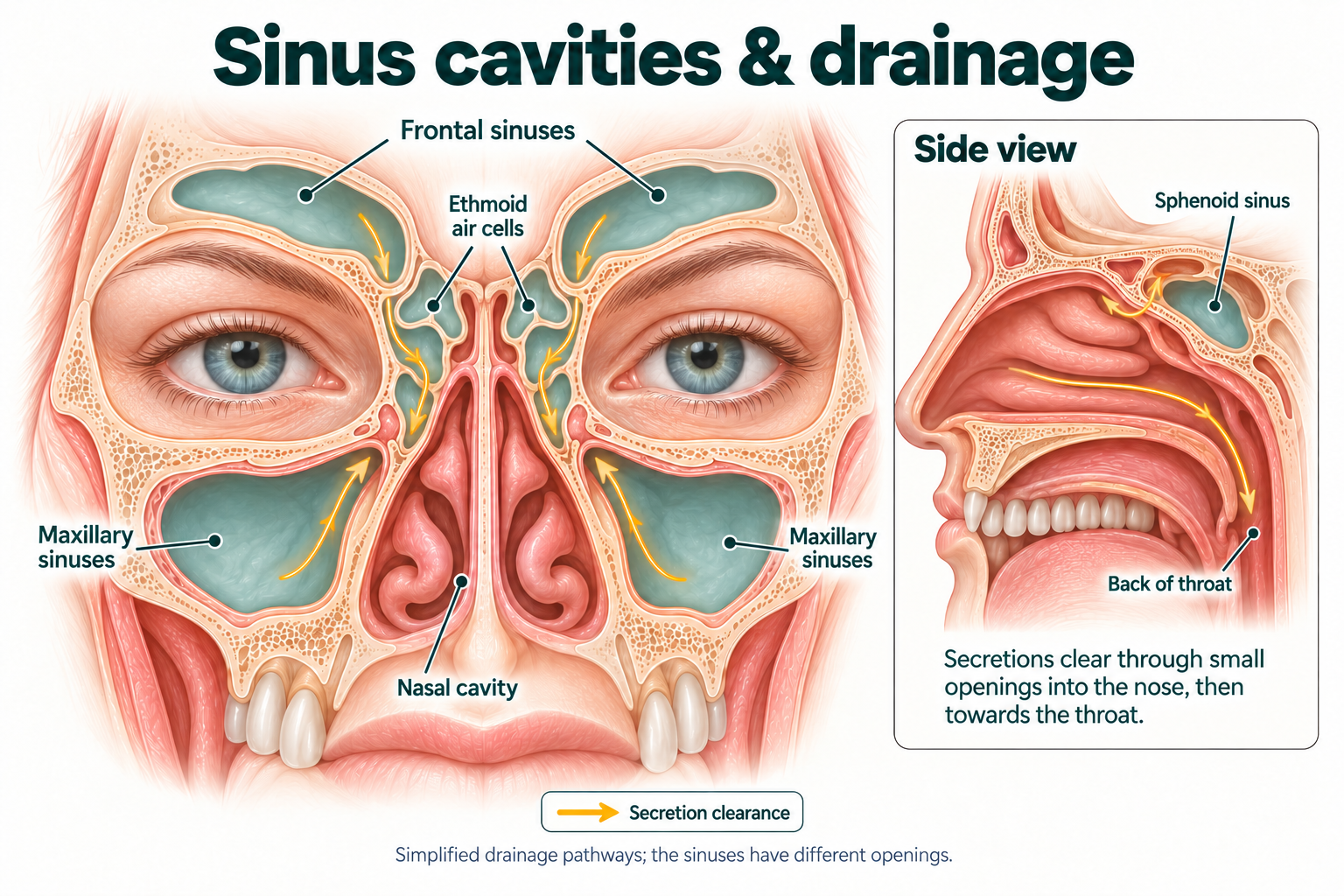
Your sinuses are air-filled cavities within the bones around your nose, cheeks, forehead and eyes. Their lining produces protective secretions, which leave through small openings into the nasal passages.
Most sinus drainage enters the nasal meatuses—the passages beneath the turbinates. The frontal, maxillary and front/middle ethmoid sinuses drain into the middle meatus, while the posterior ethmoid sinuses drain into the superior meatus. The sphenoid sinuses open into a small recess above and behind the superior turbinate. All of these routes connect with the nasal cavity.
Tiny moving hairs called cilia carry these secretions towards the sinus openings. Once inside the nose, the clearance system moves them towards the back of the nose and throat, where they are usually swallowed without you noticing.
This is an active clearance process—not simply fluid falling out of the sinuses. The openings need to remain accessible, and the lining and cilia need to function well. Inflammation, swelling or thicker secretions can interfere with this process.
When drainage becomes more noticeable, you may feel discharge passing behind the nose, collecting in the throat or prompting repeated swallowing and throat clearing. If sinus pressure and restricted nasal breathing are also present, we assess these symptoms together.
The breathing passage carries air, while the sinus openings allow secretions to clear. At Cranial Solutions, a reduction or resolution of the pressure you feel over a particular sinus, together with reduced tenderness or pressure sensitivity on palpation, is an encouraging clinical sign of improved sinus comfort. When accompanied by easier breathing and changes in discharge, these findings help us assess your progress, although they do not directly measure sinus drainage.
Nitric oxide: supporting the nose’s natural defences
Your nose and sinuses produce nitric oxide (NO), a natural signalling molecule involved in keeping the nasal lining healthy. It helps the tiny cilia move secretions along and contributes to the nose’s defence against bacteria. Research also suggests a role in regulating local inflammation, although its effects depend on the amount produced and the condition of the tissues.
At Cranial Solutions, NasalRx aims to establish comfortable nasal airflow. Our clinical model proposes that improved airflow and sinus ventilation could support the lining’s natural clearance and defence processes, including those involving nitric oxide. This offers a possible explanation for improvements in nasal comfort; the specific connection between NasalRx, nitric oxide and reduced mucosal inflammation has not yet been demonstrated in clinical studies.
Blocked nasal breathing and post-nasal drip: looking at both together
If you have a persistently blocked nose as well as discharge at the back of your throat, both deserve attention. Treatment should consider how comfortably you can breathe and what is happening to the nasal and sinus lining.
Swollen tissues can narrow the breathing passages and interfere with the small sinus drainage openings. The shape and position of surrounding structures also influence the space available within the nose. These factors can overlap, so ongoing symptoms may involve both the lining and the surrounding framework.
At Cranial Solutions, we assess your pattern of airflow restriction alongside sinus pressure, discharge and tenderness. We also consider what nasal sprays, previous surgery or other treatments have achieved, and where symptoms remain.
This helps us assess whether NasalRx may be suitable for your nasal and sinus symptoms, including troublesome discharge when breathing already feels comfortable. Changes in discharge, throat clearing, sinus comfort and breathing are reviewed together, with other contributing causes considered when needed.
How Cranial Solutions assesses post-nasal drip and restricted breathing
We begin with what you experience day to day: how freely each side of your nose breathes, where you feel facial pressure, when discharge becomes noticeable, and how these symptoms affect sleep and comfort.
Our assessment considers the cranial and facial framework around the nasal passages, including the septum, maxilla and palatine bones. Palpation helps us assess tenderness and the movement we feel through these areas, alongside your description of airflow and sinus symptoms.
Where NasalRx is suitable, we generally use a series of six treatments, reviewing your response throughout. Our aim is lasting, comfortable nasal breathing, with improvements in sinus pressure and troublesome discharge assessed alongside changes in airflow.
In our clinical experience, patients often report easier breathing after treatment. Some also notice sinus discharge passing towards the back of the throat. We track whether this settles into greater comfort and less persistent throat clearing over the course of treatment.
Progress is assessed through your symptoms, breathing comfort and repeat palpation. These findings help us review your response; they do not directly measure sinus emptying or establish a change in bone position. Allergy, infection or other causes of persistent discharge may also need attention.
Post-nasal drip treatment: choosing an approach that fits the cause
The aim is to reduce troublesome discharge and throat clearing while improving everyday breathing and comfort. The most useful approach depends on what is contributing to your symptoms.
When the nasal lining is irritated or inflamed
Allergy management, reducing exposure to smoke or other irritants, and suitable treatment for nasal inflammation can help. Saline nasal sprays may ease dryness and thick secretions. Steroid nasal sprays can be useful for allergic or inflammatory conditions; they work differently from decongestant sprays, which can cause rebound congestion with prolonged use.
Considering NasalRx for persistent nasal and sinus symptoms
At Cranial Solutions, you can discuss NasalRx as an option for persistent post-nasal drip, either on its own or alongside approaches that address allergy, inflammation or reflux, depending on your assessment and any other care you need. We assess the cranial and facial framework as well as your symptoms, whether or not nasal airflow feels restricted, and review discharge, throat clearing, sinus comfort and breathing throughout the protocol.
When symptoms come mainly from the throat
Reflux, swallowing difficulties or throat muscle tension may need a different approach. At Cranial Solutions, we can also assess muscle tension around the hyoid—the small bone at the front of the neck involved in swallowing. Where silent reflux is suspected, we can discuss dietary and lifestyle measures and suggest suitable natural supplements where appropriate, considering their evidence, your health history and any medicines you take. Clarifying the source helps us tailor care to what is contributing to your throat symptoms.
If symptoms persist, your GP or ENT provider can help assess ongoing inflammation, infection or another contributing condition. Treatment can address more than one factor when needed.
Post-nasal drip: common questions
Can post-nasal drip cause a cough?
Yes. Secretions passing towards the throat can be associated with irritation, coughing and repeated throat clearing. A persistent cough can also have other causes, including reflux, asthma or a respiratory infection, so it is worth checking if it continues.
Why is post-nasal drip more noticeable at night?
You may notice throat drainage more when lying down, particularly if your nose is also blocked. Reflux can also contribute to nighttime throat symptoms. The timing helps guide assessment, but does not identify the cause on its own.
Does post-nasal drip always mean a sinus infection?
No. Allergies, irritation of the nasal lining and other conditions can produce similar symptoms. Yellow or green discharge alone does not establish a bacterial infection or identify what treatment is needed.
Can NasalRx help with post-nasal drip even if my nose feels clear?
In our clinical experience, we have seen post-nasal drip resolve after a NasalRx treatment series, including in patients who did not report restricted nasal airflow. A blocked nose is therefore not a prerequisite for an assessment at Cranial Solutions. We review troublesome discharge, throat clearing and sinus comfort as well as breathing. These are clinical observations rather than outcomes established in controlled NasalRx studies.
Who can help with persistent post-nasal drip?
You can book an assessment at Cranial Solutions to discuss NasalRx for persistent post-nasal drip, whether or not your nose feels blocked. NasalRx can be considered on its own or alongside approaches such as allergy management, nasal medicines and reflux treatment, depending on your assessment and any other care you need.
Your GP can assess ongoing inflammation, infection or other medical causes and arrange an ENT assessment where appropriate. Difficulty swallowing, persistent voice changes or worsening symptoms should be assessed by your GP.
Explore related topics
- Blocked nose and sinus pressure — the wider guide to nasal airflow and sinus comfort.
- Deviated septum: symptoms and treatment options — understanding the cartilage and bony septum.
- Nasal sprays and rebound congestion — how different sprays work and why prolonged decongestant use can become a problem.
- NasalRx safety and what to expect — preparing for assessment and treatment.
References and further reading
These sources support the explanation of post-nasal drip and its possible causes. Muscle-tension studies concern selected patients with swallowing or voice symptoms; they do not establish tight hyoid muscles as a common cause of post-nasal drip or a NasalRx treatment effect.
- American Academy of Otolaryngology–Head and Neck Surgery: Post-nasal drip.
- Healthify: Sinusitis, inflammation and nasal drainage.
- Healthify: Hay fever.
- ENT Health: Gastro-oesophageal and laryngopharyngeal reflux.
- Kang and colleagues: Muscle tension dysphagia—contributing factors and treatment efficacy.
- Buckley and colleagues: Relative fundamental frequency in globus syndrome and muscle tension dysphagia; an acoustic study did not find differences between groups.
- The San Diego Consensus for Laryngopharyngeal Symptoms and Laryngopharyngeal Reflux Disease.
- Mucociliary function of the maxillary sinuses after restoring ventilation: a radioisotopic study.
- Study of maxillary sinus mucociliary transport through the natural drainage opening.
- The frontal sinus drainage pathway and related structures: imaging and anatomical drainage pathways.
- Lee and colleagues (2012): Nitric-oxide signalling, ciliary clearance and antibacterial defence in human sinonasal cells.
- Irander and colleagues (2012): A small observational study suggesting anti-inflammatory roles for nasal nitric oxide and CC16.
- Suojalehto and colleagues (2014): Nasal nitric oxide reflects both sinus obstruction and allergic inflammation; higher levels do not necessarily mean less inflammation.
- ENT Health: Inflammation and swelling can obstruct sinus drainage channels.
- Health New Zealand: Cough in adults and when to seek medical advice.