
Blocked Nose at Night: Causes & Treatment Options
When your nose blocks as soon as you lie down
Your breathing may feel comfortable during the day, only for your nose to become blocked when you settle into bed. You might turn from side to side to find a clearer passage, breathe through your mouth, or wake with an uncomfortable dry mouth.
Lying down can change how congested the tissues inside your nose become. The normal nasal cycle also shifts airflow between the two sides. When the passages are already narrowed or the lining is inflamed, these changes can make nighttime breathing noticeably more difficult.
At Cranial Solutions, we assess the nasal lining alongside the cranial and facial structures surrounding the airway. We consider how each side breathes, what changes with sleeping position and what previous treatments have achieved.
NasalRx is central to our approach to improving nasal function. In clinical practice, we regularly observe easier nasal breathing following treatment. For patients troubled by nighttime blockage, we also review whether that improvement carries through to more comfortable breathing in bed.
Our aim is lasting, comfortable nasal airflow—so bedtime is less about finding a position that lets you breathe and more about settling comfortably to sleep.
Why does your nose become blocked when you lie down?
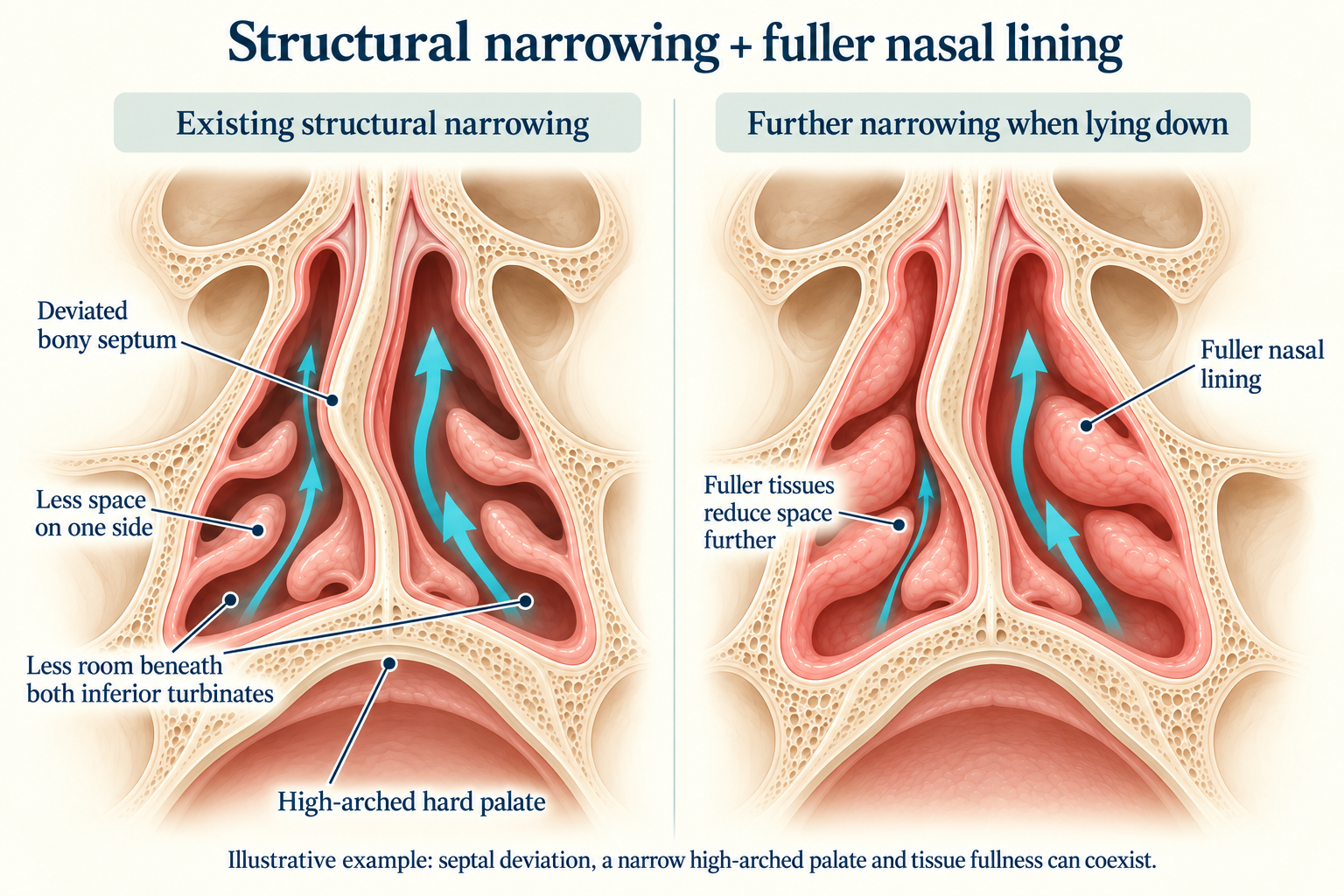
The tissues lining your nose contain a rich network of blood vessels. When you lie down, changes in circulation can increase their fullness, leaving less space for air to pass. This is particularly noticeable around the turbinates, which help warm, humidify and filter the air you breathe.
Your nose also has a natural rhythm called the nasal cycle. The lining on one side becomes fuller while the other side opens more, with the balance changing over time. Sleeping on your side can further influence which nostril feels clearer.
These changes are usually manageable when there is enough room within the nasal passages. But if the airway is already restricted, a modest increase in tissue fullness may be enough to make breathing uncomfortable. You may find that turning over clears one side while the other becomes blocked.
The space around the tissues matters too
Nighttime blockage is not always simply a problem of swollen tissues. The septum and surrounding facial framework also influence the space available for breathing. Inflammation and structural narrowing can occur together, making normal changes in tissue fullness more noticeable.
At Cranial Solutions, we consider both. Our NasalRx assessment looks at nasal airflow alongside the septal region, upper jaw, palate and connected facial structures. We also ask whether the blockage alternates with position or consistently affects the same side, helping us understand your particular pattern.
Mouth breathing, dry mouth and snoring at night
When your nose becomes blocked at night, breathing through your mouth can become the easier option. You may not notice it while asleep, but wake with a dry mouth, an irritated throat or the feeling that your breathing was uncomfortable overnight.
Air passing through an open mouth can dry the mouth and throat. Medicines and other factors can also contribute, so we consider morning dryness alongside your breathing pattern.
Nasal restriction can contribute to snoring alongside tongue and jaw position and the laxity or tissue condition of the soft palate. We assess nasal airflow and review whether any remaining soft-palate contribution needs separate attention.
During NasalRx care, we review whether easier nasal airflow carries through to less mouth breathing, reduced morning dryness, quieter snoring and more comfortable sleep. Our aim is lasting nasal breathing that feels natural during the day and through the night.
Breathing pauses, gasping or marked daytime sleepiness warrant assessment for sleep apnoea. Quieter snoring alone does not confirm that sleep apnoea has resolved.
For a fuller explanation, see our mouth-breathing page, which is planned for expansion into a nasal-versus-mouth-breathing guide.
How NasalRx care approaches nighttime nasal blockage
If you spend each night turning over to find a clearer nostril or opening your mouth to breathe, our aim is to help you establish comfortable nasal airflow that lasts beyond the treatment room.
At Cranial Solutions, we consider the pattern of your blockage, the nasal lining and the connected facial framework, including the septal region, maxilla and palate. We also review what nasal sprays, previous surgery or other treatments have achieved, and where restriction remains.
A course of care, with changes reviewed along the way
Where NasalRx is suitable, we recommend a series of six treatments. In our clinical experience, many patients report substantial, lasting improvements in nasal breathing after completing the protocol. For nighttime symptoms, we review both the change you notice immediately after treatment and how comfortably you breathe at home when lying down and sleeping.
The goal is to resolve nighttime nasal restriction where possible, or achieve a substantial reduction when symptoms persist. We follow changes in each side of the nose, dependence on sleeping position, mouth breathing and morning dryness, alongside your overall sleep comfort.
These everyday changes show how treatment is affecting your experience of breathing. They do not, by themselves, measure the position of a particular bone or establish that every cause of nighttime blockage has been addressed.
If snoring remains after nasal breathing improves, the soft palate may need separate assessment. Our snoring guide explains complementary options, including non-ablative laser treatment provided by an appropriately qualified external clinician.
Frequently asked questions
Why is my nose blocked at night but clear during the day?
Lying down can increase fullness in the nasal lining, while the natural nasal cycle changes which side feels clearer. If the available space is already limited, these changes can make a nose that feels manageable during the day feel blocked at bedtime.
Why does one nostril block when I sleep on my side?
Sleeping position can influence congestion, with the nostril nearest the pillow often feeling more blocked. If the blockage switches when you turn over, position and the nasal cycle may be contributing. A nostril that stays blocked regardless of position deserves a closer look at the cause.
How can I stop mouth breathing at night?
A useful starting point is understanding whether nasal restriction is making mouth breathing the easier option. At Cranial Solutions, we assess nasal function and the surrounding facial relationships, then discuss NasalRx care where suitable. We review whether improved nasal comfort carries through to less mouth breathing during sleep.
Can NasalRx help if nasal sprays or surgery have not fully improved my breathing?
Yes, you can arrange an assessment even if previous treatment has left you with nighttime restriction. In our clinical practice, we see patients who report further improvements with NasalRx after sprays or nasal surgery have provided only partial benefit. We consider what those treatments achieved and review the response to a six-treatment protocol where suitable.
Make comfortable nasal breathing part of your night
If nighttime blockage is leaving you searching for a clearer nostril or waking with a dry mouth, book an assessment at Cranial Solutions. We will review your breathing pattern, previous treatment and nasal and facial relationships, and discuss whether a NasalRx course is suitable for you.
Related reading
- Blocked Nose & Sinus Pressure
- Deviated Septum
- Swollen Turbinates
- Nasal Sprays & Rebound Congestion
- Mouth Breathing — existing page planned for expansion
- NasalRx Cranial Facial Release
- NasalRx Safety & What to Expect
References and further reading
- Nasal floor and hard palate morphology in persistent nasal obstruction
- Effects of posture change on nasal patency
- Posture and the nasal cycle
- Oral flow, nasal obstruction and respiratory events during sleep
- NIDCR: Dry Mouth
NasalRx outcomes described here reflect Cranial Solutions’ clinical observations. The research sources support physiology and symptom relationships.