
Cranial Solutions · Auckland & Christchurch
Advanced Class 4 Laser Therapy for Deep Tissue Recovery
Experience high-power photobiomodulation designed to target deep-seated cranial, spinal, and musculoskeletal structures. Class 4 laser therapy represents the most powerful class of therapeutic lasers, delivering higher photon energy to target cellular function, local circulation, and tissue repair processes - an optional part of care, guided by your examination.
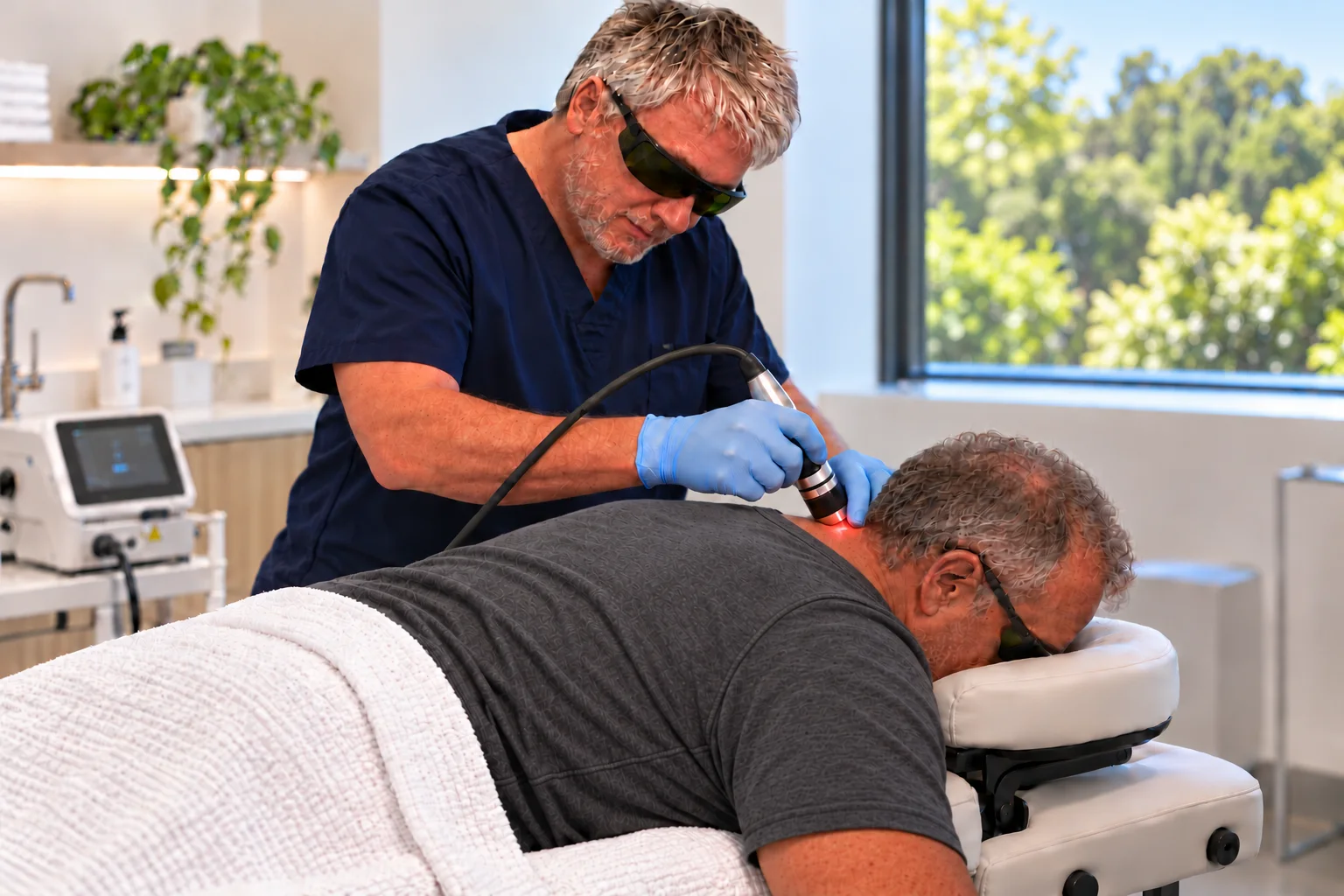
How does Class 4 laser therapy work?
Photobiomodulation, or PBM, uses red or near-infrared light to influence how cells work. Researchers study its effects on cell energy, repair signals, inflammation and circulation. [20] [22]
“Class 4” is the laser's safety category. The wavelength, settings, treatment area and amount of light reaching the tissue all affect the response.
Why consider laser in cranial treatment?
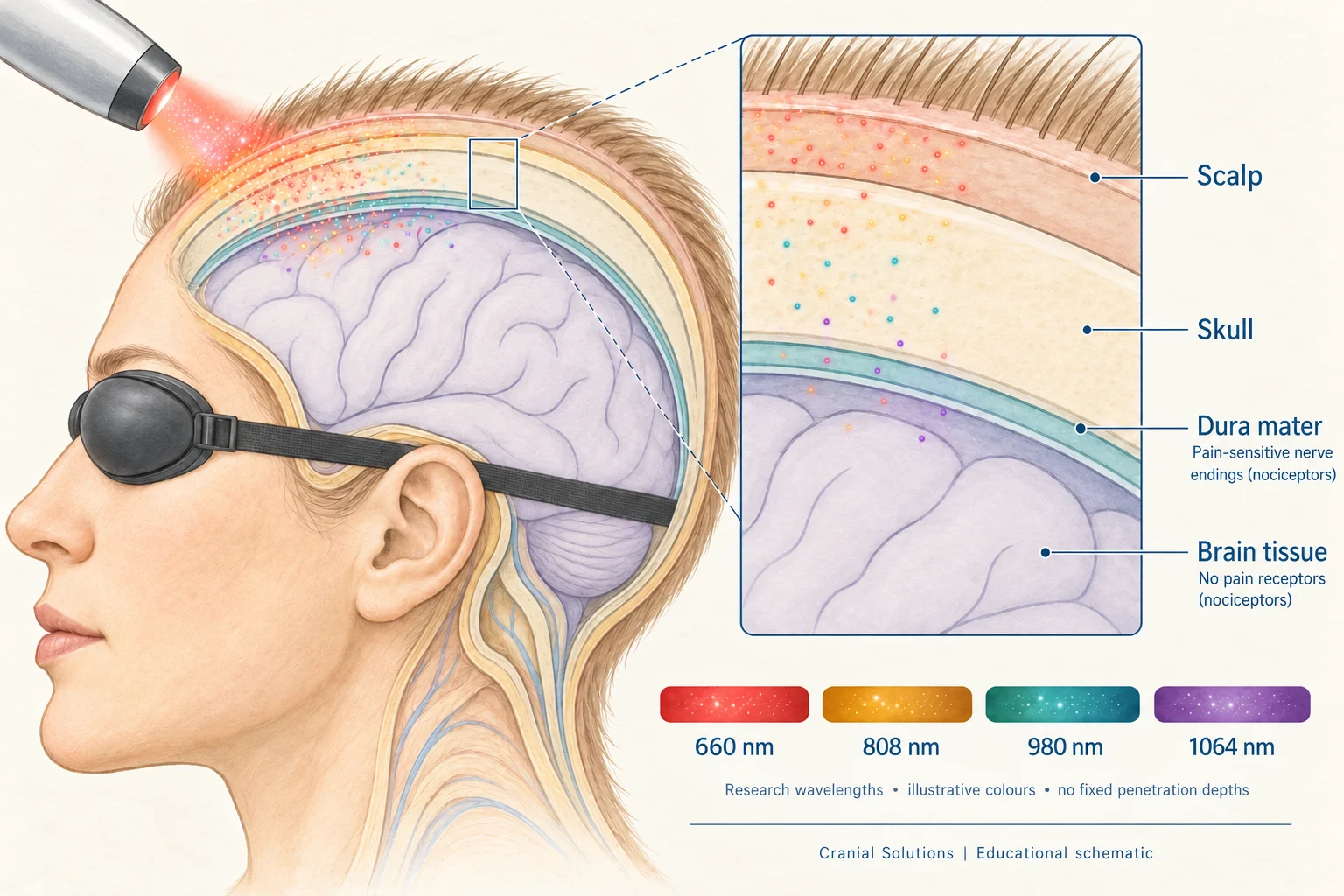
Cranial symptoms can involve the scalp, facial tissues, jaw muscles and upper neck, as well as pain-sensitive structures inside the skull. Understanding which tissues may contribute to your symptoms comes first.
The dura lies just inside the cranial bones. Its folds and attachments extend around the cranial base and between parts of the brain. Explore the dura's attachments and referred pain patterns.
Can light reach beneath cranial bone?
Human laboratory studies show that some near-infrared light can pass through the skull. How much reaches a particular region varies. Studies at the forehead or through a skull sample do not establish the dose at deeper structures such as the cranial base. [1] [2] [3]
What are the potential benefits and plausible cranial mechanisms?
Here is a short guide to the main areas of research. Dural fibroblasts are the cells that maintain the dura's connective tissue. CSF is the fluid surrounding the brain and spinal cord.
Laser and PBM research at a glance Potential effect Cranial relevance Evidence Support cell energy Energy-related changes in dural fibroblasts are plausible. Measured in tendon cells. [20] Influence tissue repair Changes in the dura's collagen-maintaining cells are plausible. Cell and animal studies; the direction of collagen change varies. [4] [9] [20] Modify inflammatory signals Changes in the dura's immune environment are plausible. Meningeal effects measured in mice; cell-study results vary. [6] [24] Influence pain Modulation of dural pain signalling is plausible. Early human migraine findings; the dural mechanism is unconfirmed. [5] [7] [8] Support local circulation Blood-flow and oxygen-related effects in cranial tissues are plausible. Small human studies in other regions and cranial physiology research. [11] [22] [23] Influence fluid-drainage vessels Meningeal lymphatic vessels near the dura may respond to light. Improved drainage measured in mice. [17] [18] Influence CSF movement Short-term changes in the fluid surrounding the brain have been observed. One physiological study in healthy adults; clinical benefit remains uncertain. [16] Current research looks promising. These studies used different devices and light settings. Read the full evidence table and numbered references →
How does this relate to migraine or concussion symptoms?
Research into pain signalling, circulation and the membranes surrounding the brain is relevant to understanding these symptoms. It helps frame questions about cranial treatment, while clinical benefit needs its own evidence.
For migraine, small laser-acupuncture studies offer early findings using a different approach from this clinic's Class 4 treatment. [7] For concussion, CSF and meningeal findings do not establish that laser repairs an injured brain or speeds recovery. Care should remain coordinated with appropriate medical and rehabilitation support.
What should you expect at your visit?
Your practitioner will discuss whether laser is appropriate, which region to treat and what changes to monitor. The proposed region may include scalp, facial, jaw or upper-neck tissues, depending on your findings. A symptom location alone does not identify an underlying dural region.
You will use appropriate laser eye protection. The practitioner selects the settings and application method for the intended tissue and follows the device's safety instructions.
Agree a practical goal, such as a change in pain, neck comfort or day-to-day function, and review your response. Optional Class 4 laser is an additional $40 when agreed and provided. See fees and treatment terms.
Would you like to see the research?
Each numbered citation opens its source in our Research section, alongside the detailed table, study methods and evidence limits.
About the clinic’s clinical lead
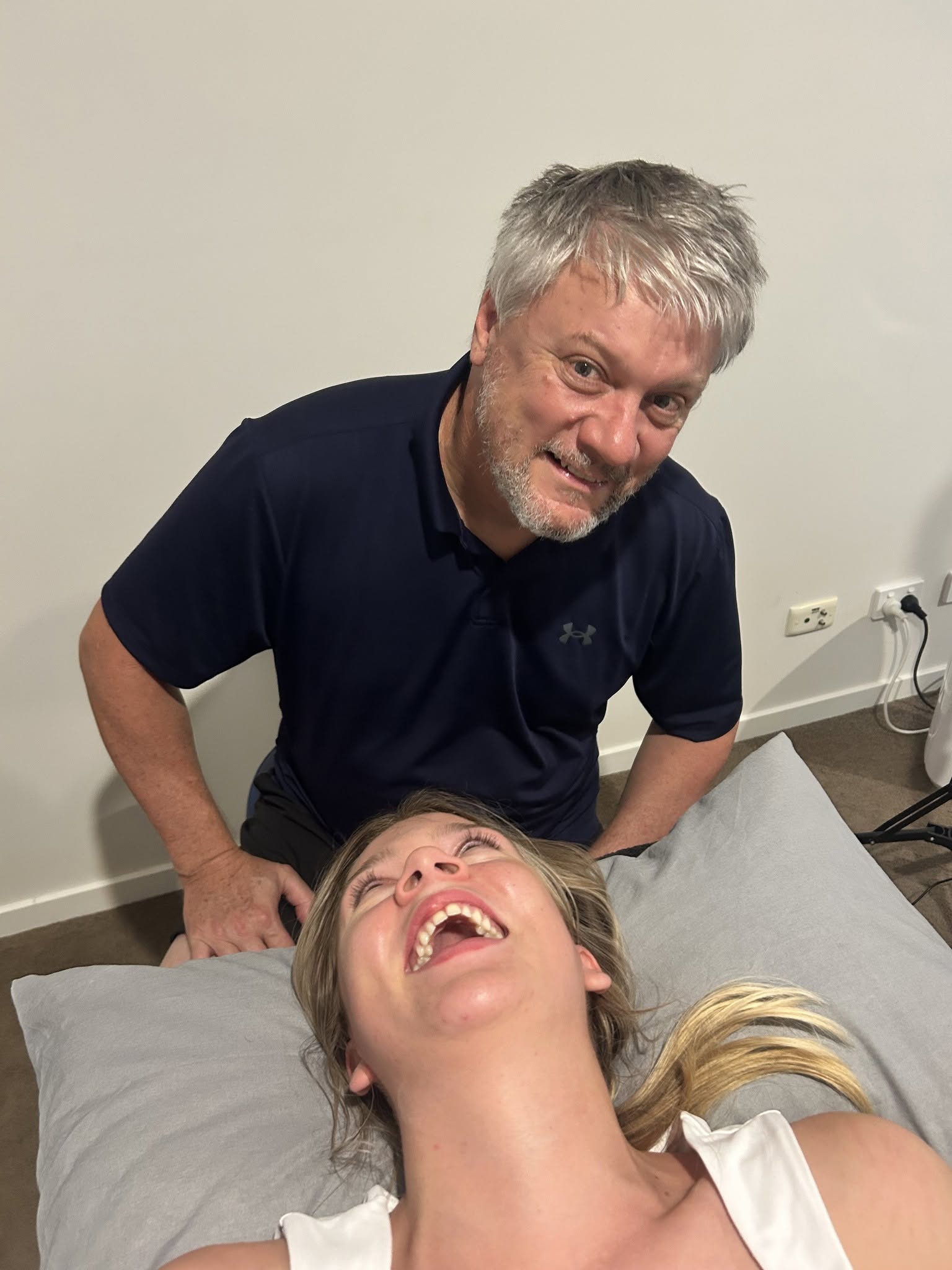
Dr John Gibson Musculoskeletal & Craniocervical Practitioner/Sports Chiropractor
BMedSci (Hons Pharma), MChiro
John has 27 years of clinical experience, with a focus on conditions affecting the head, jaw, nasal airway and upper neck. At Cranial Solutions, he combines each patient’s history and examination findings to discuss suitable treatment options.
Read John’s qualifications and clinical background →
Your next step
Ready to Experience Advanced Craniocervical Care?
The call is free, with no obligation.